Category Archives: Uncategorized

LATITUDE THEME: SPACE

Standard
Head-space-full-web

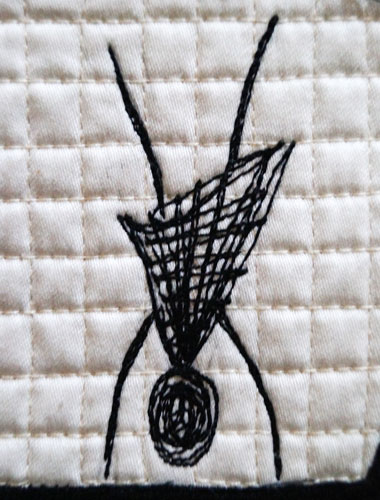
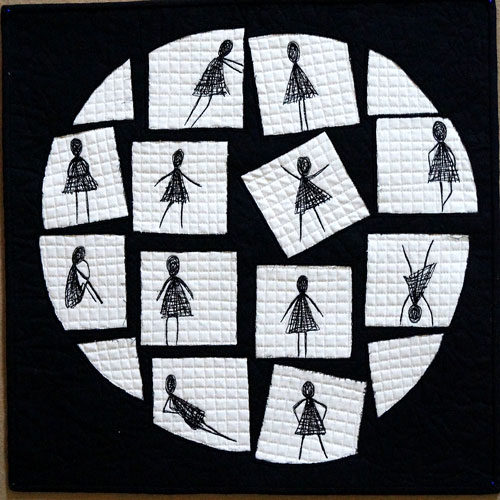
‘Head-space’ 15′ x15′ by Linden Lancaster 2014

‘HEAD-SPACE’

How do we react when we feel trapped in a negative situation? Our thoughts will determine how we respond. Perhaps we might:
Ignore it and put our head in the sand?
Curse and rant about it?
Worry and fret until we make our selves sick?
Become resigned to it?
Hide?
Become a ‘Pollyanna’?
Analyse it?
Pray about it?
Become comatose?
Run around trying to fix things

Perhaps all of the above?

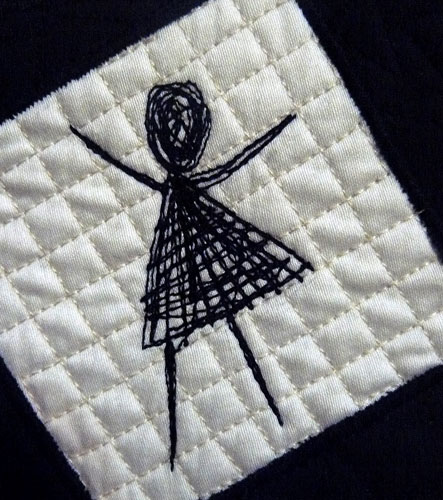
This piece was designed from a simple exercise of cutting a circle into 16 pieces and playing with the parts while keeping the integrity of the circle. The white is meant to represent the negative space in this instance. Windows were cut out of the black fabric and then fused over the white background. The figures were quilted with a free motion foot through the three layers with heavy black 40 black thread.

Head-space-web

‘Head-space’ detail Linden Lancaster 2014

Head-space-detail-web

‘Head-space’ detail by Linden Lancaster 2014


The Great Moira Art Show May 31st 2014

Standard

THE GRAIN STORE is a not for profit art gallery in Nathalia,  Northern Victoria.

This is a dynamic survey exhibition of art work from around the Moira Shire. This exhibition brings together painting, drawing, mosaics, textiles and printmaking from Picola, Barmah, Numurkah, Yarrawonga, Nathalia and Cobram.

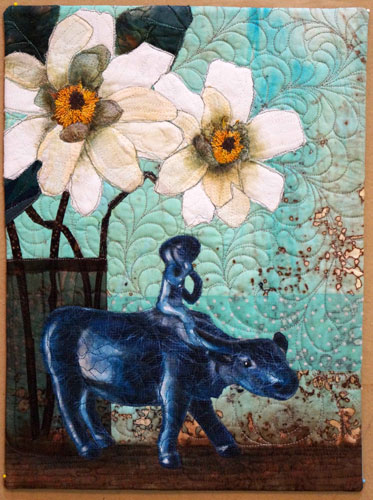
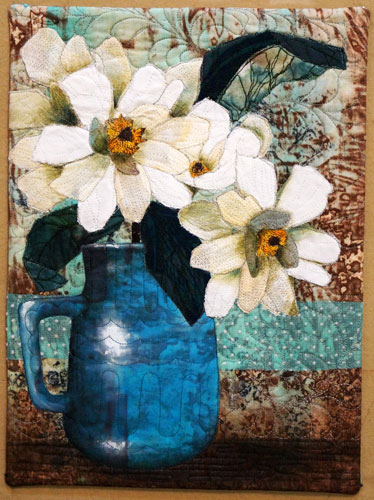
The following is a still life triptych which I have made specially for this exhibition. Each piece is A3 size and is based on the Michellia flower from my country garden. I borrowed the little statue from my sister!

Michellia1-1Michellia-1-2-webMichellia1-3-web

MICHELLIA 1 2014


NEW ZEALAND EXHIBITION

Standard

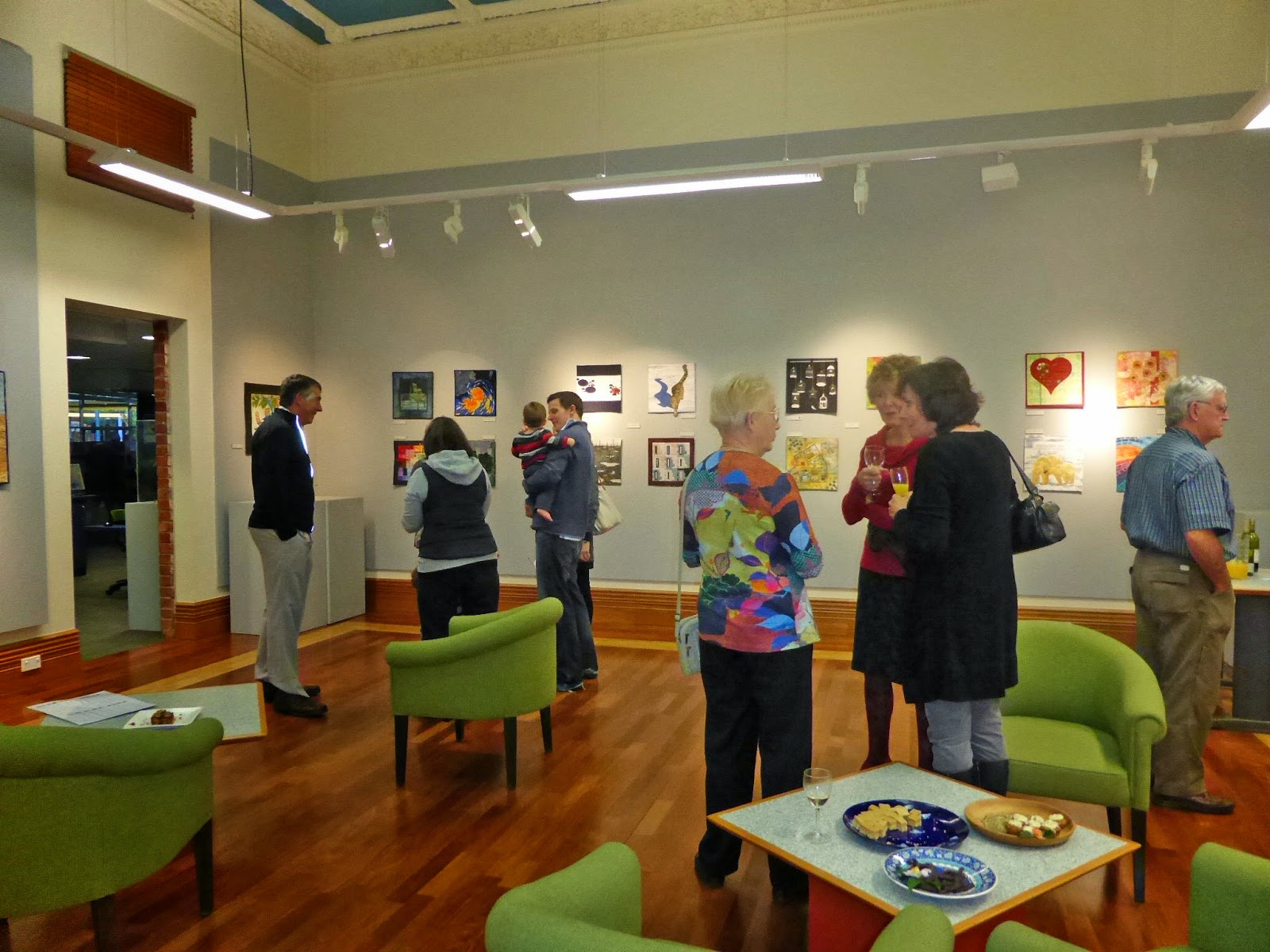
Meeting the Challenge exhibition in New Zealand

Four  latitude members were invited to put together an exhibition which included
our 8 challenges so far, and some larger works that represent our own styles and
which enhanced the range presented. They were Julia, Deborah, Margy and Linden.
The exhibition opened on the 4th May in the Chamber Gallery, Rangiora Library,
and runs until the 4th June. The Chamber is a historic (for New Zealand) council
chamber room which has been incorporated into the newer library building,
and is accessed from the library. It has exhibitions for a month at a time throughout the year,
mostly local artists in a variety of media.
The ones preceding ours this year included paper sculpted wall art,
monoprints and 3 D wire weavings,and humorous acrylic paintings and drawings.

The challenge quilts are hung in their groups of four on the two longer walls,

while the larger works are on the wall facing you as you enter from the libary
and its opposite wall. They are well lit with spotlights, although that makes
photography more difficult. The reception from those invited to the opening
was positive and the overall feeling is a happy and vibrant collection of works which
repay detailed examination. Some, but not all, of the viewers had some prior knowledge of textile art,
and the others were amazed at the technical skills shown.

A big thanyou to Julia who organised everything including measuring, wall plans,  labelling,

programming and liasing with the chairman of the Art Council.

Here are a couple of photos.

The rest can be seen in Julia’s  Dropbox folder which you can access here

My Top Ten Art Quilting books

Standard

Call me old fashioned, but I still like to hold a book in my hand, look at the pictures time again and, God forbid, underline all the important bits! My collection of books give me a sense of well being. I have taught myself how to do art quilting through books.

The following is my top ten titles that have been the most inspiring and useful to myself. If I had to choose only 10 books to keep, these would be the ones.

These are in no particular order.


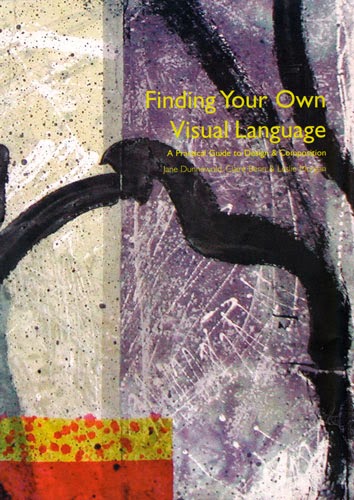
Number 1

Finding Your Own Visual Language by Jane Dunnewold, Claire Benn & Leslie Morgan

How to gets started, move forward and go deeper in producing the ideas you have in your head.

Lots of visual exercises and a wonderful further reading section at the end.


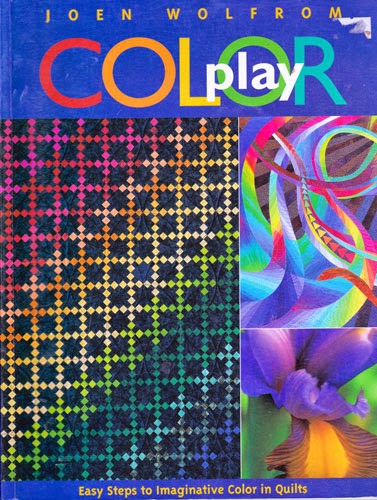
Number 2

Color Play by Joen Wolfrom

I have quite a number of books about colour and I think this is the best. The information is useful for quilters at any level. Joen has also a colour tool which I highly recommend.

I used the tiadic colour scheme of blue, red and yello-green in my quilt ‘I Dream in Colour’ (lindenlancaster.com/gallery)


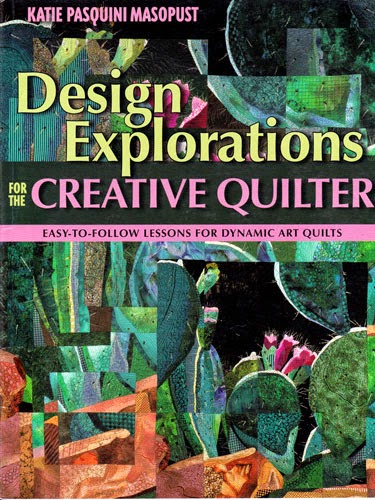
Number 3

Design Explorations for the Creative Quilter by Katie Pasquini Masopust

This book is chock-full of explorations in concepts such as shapes, lines, details, repetition and even blind painting!

Katie has a range of similar titles; it was really hard to choose which one I liked the best.


Number 4

Free-Style Quilts by Susan Carlson

This book revolutionized my art quilting practice.There are no rules and the ‘collage’ technique is fun and easy. Susan’s quilts are truly inspiring. Katie is very fortunate to have done the workshop with Susan recently.

I used this method for the rabbit in ‘Rabbit Proof Fence’ and ‘Dorothy’s Quinces’ (lindenlancaster.com/gallery).


Number 5

Contemporary Quilts by Sandra Meech

Inspiration for creativity. How to create a sketchbook and build up a dossier of design ideas. Developing themes and techniques.

Sandra has a number of similar titles.


Number 6

Art Cloth by Jane Dunnewold

This is the ‘bible’ from this guru of surface design. A wonderful reference book for techniques such as dyeing, discharging, screen printing, stamping, stenciling, painting. Supersedes ‘Complex Cloth’.


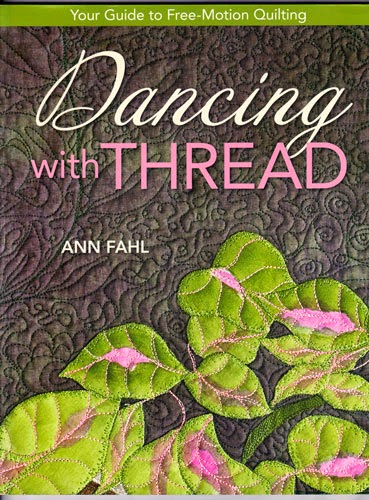
Number 7

Dancing with Thread by Ann Fahl

This a guide to free-motion quilting. Create designs using your own doodles as patterns. Add movement and personality to your quilts. The best thing about this books is the troubleshooting guides to solve common problems- I go back to this whenever I am having difficulties. Ann also has a book out on thread sketching (Coloring with Thread) which is also very good.


Number 8

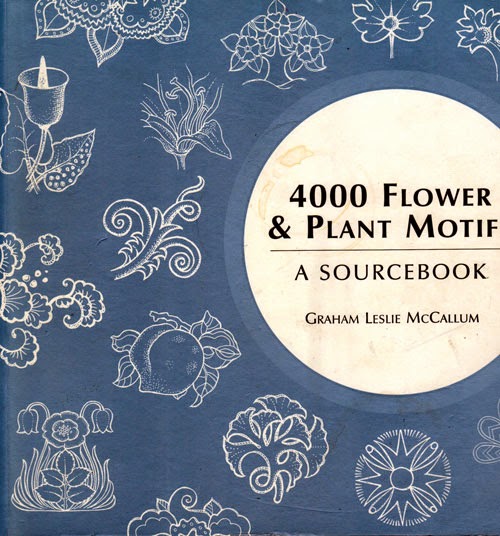
 4000 Flower & Plant Motifs by Graham Leslie McCallum


I was so happy the day I found this book. Not many of us have the time to spend drawing from original sources (although I think this is by far the best way for development of your own personal imagery). This has been a very useful resource for looking up designs from different historical and regional perspectives.The designs are copyright free.


Number 9

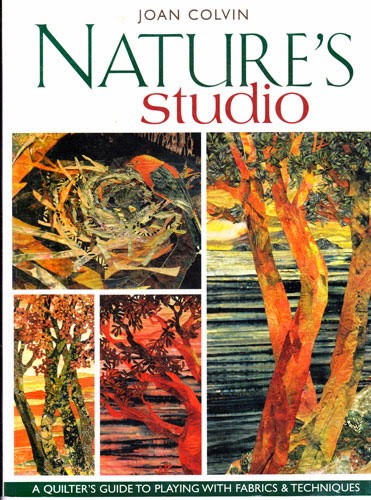
 Nature’s Studio by Joan Colvin

Joan’s quilts are uniquely elegant and inspiring. She shares some valuable techniques on creating soft and hard edges and colour blending. Again it’s all about developing your own style.


Number 10

Ruth B. McDowell’s Piecing Workshop

Although I rarely use Ruth’s methods for piecing, I felt I had to include this author as her quilts are awesome. It would be worthwhile to learn at least the first couple of techniques. Although these techniques are time-consuming, the end results are truly worth the effort. I used this method in the background of my quilt ‘Cameron’s Drought’.
‘Living Colour’ exhibition

Standard
LLancasterFull

Six Gouldian Finches by Linden Lancaster 2014

As a school child, I was encouraged to join the ‘John Gould Bird League’, and as a result I grew in my awareness and appreciation of birds.
It is appropriate that these beautiful jewel-like birds carry the name of this amazing and influential naturalist.
Gouldian finches are indeed a kaleidoscope of living colour!
Techniques & Materials: Pieced background overlaid with raw-edge applique.
Free-motioned quilted with rayon thread on a domestic machine.
Mostly hand dyed and ‘surface enhanced’ fabrics, including the use of thermofax stencils and a small amount of fabric paint.


This exhibition, curated by Brenda Gail Smith, will be travelling to places in Australia, New Zealand, France and USA. For more details look up the ‘Living Colour’ website.

A beautifully presented small format catalogue is available on Amazon displaying all 32 quilts and artists statements.

LLancasterDetail

Six Gouldian Finches, detail


‘Bird Brained Balance’

Standard

DSC00447

DSC00451

DSC00448

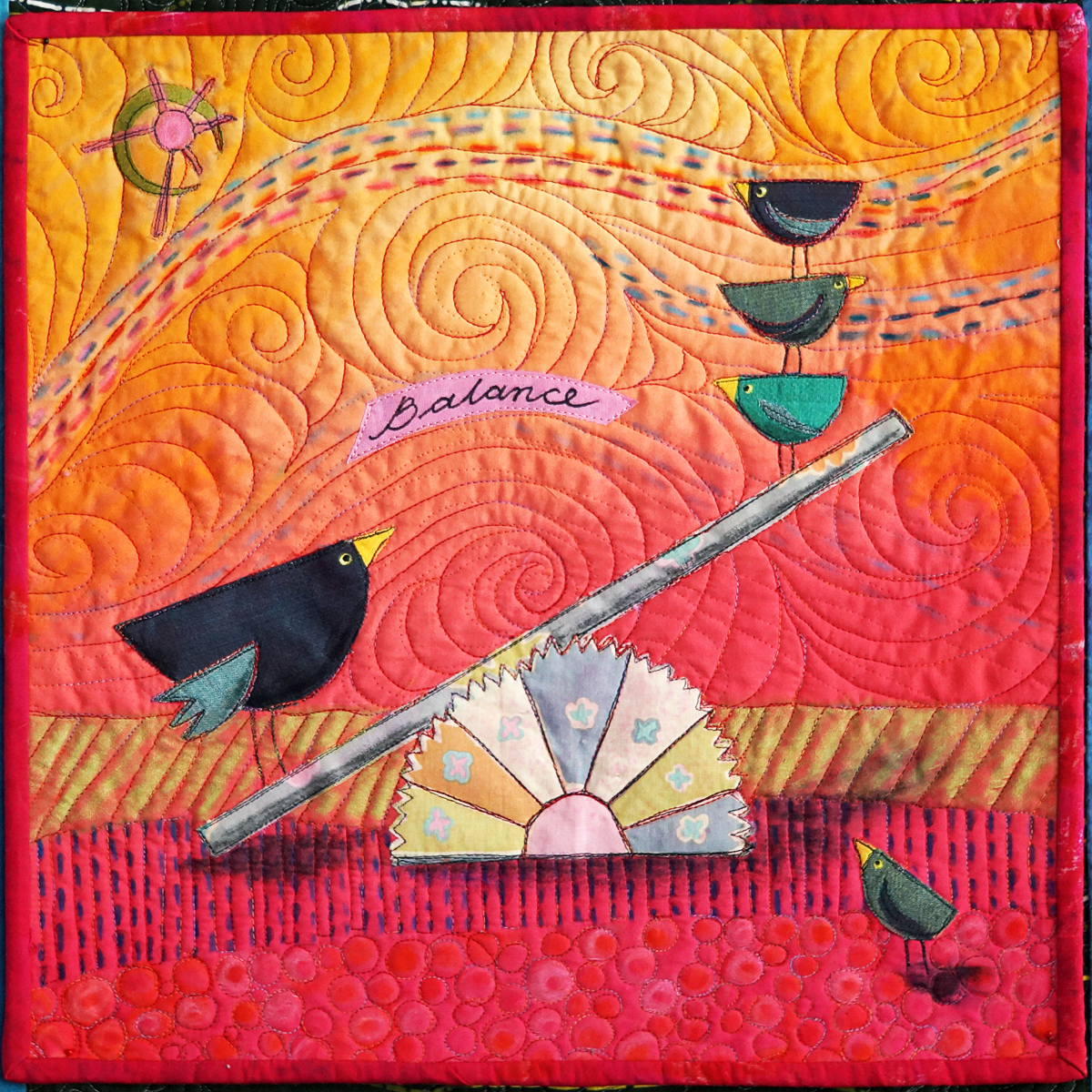
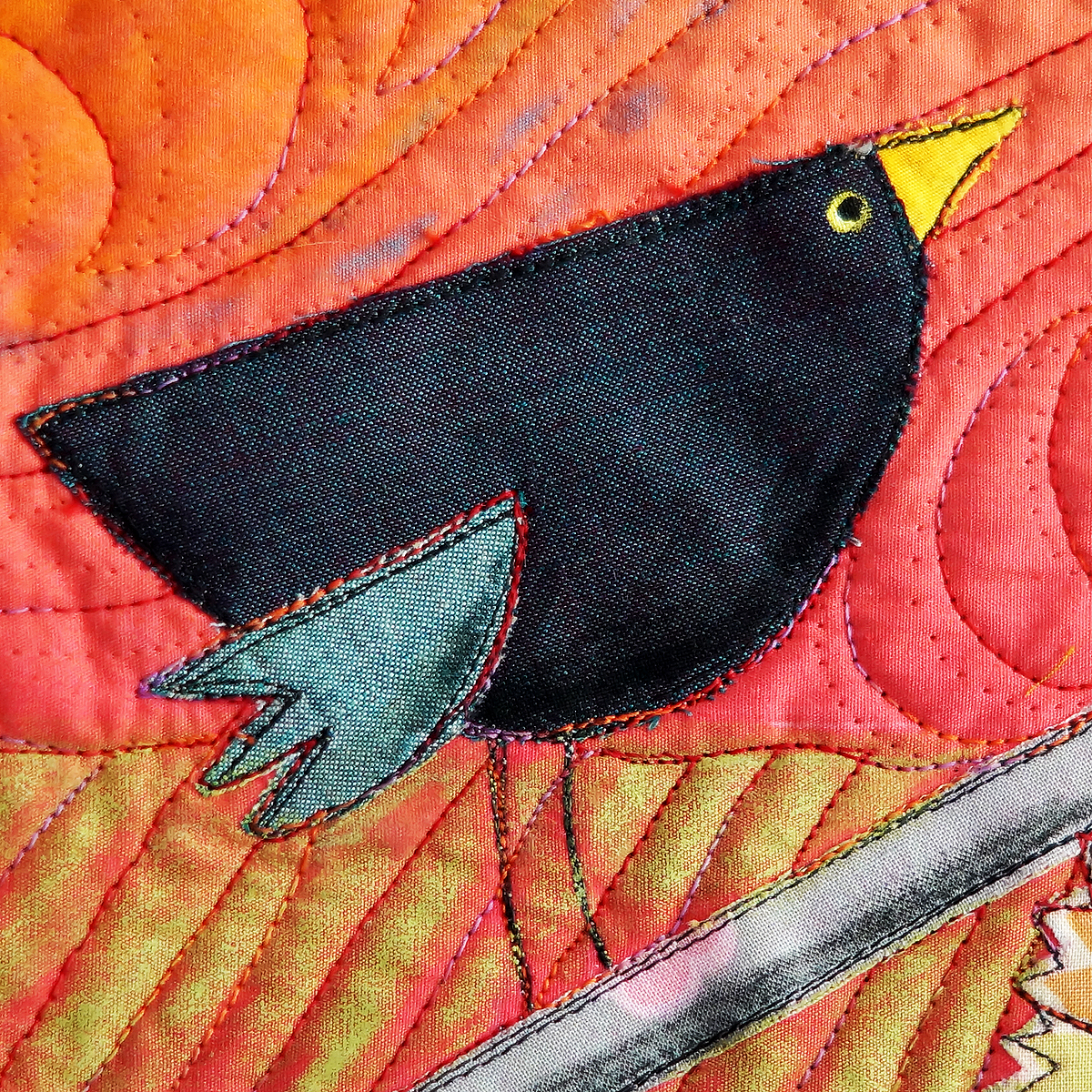
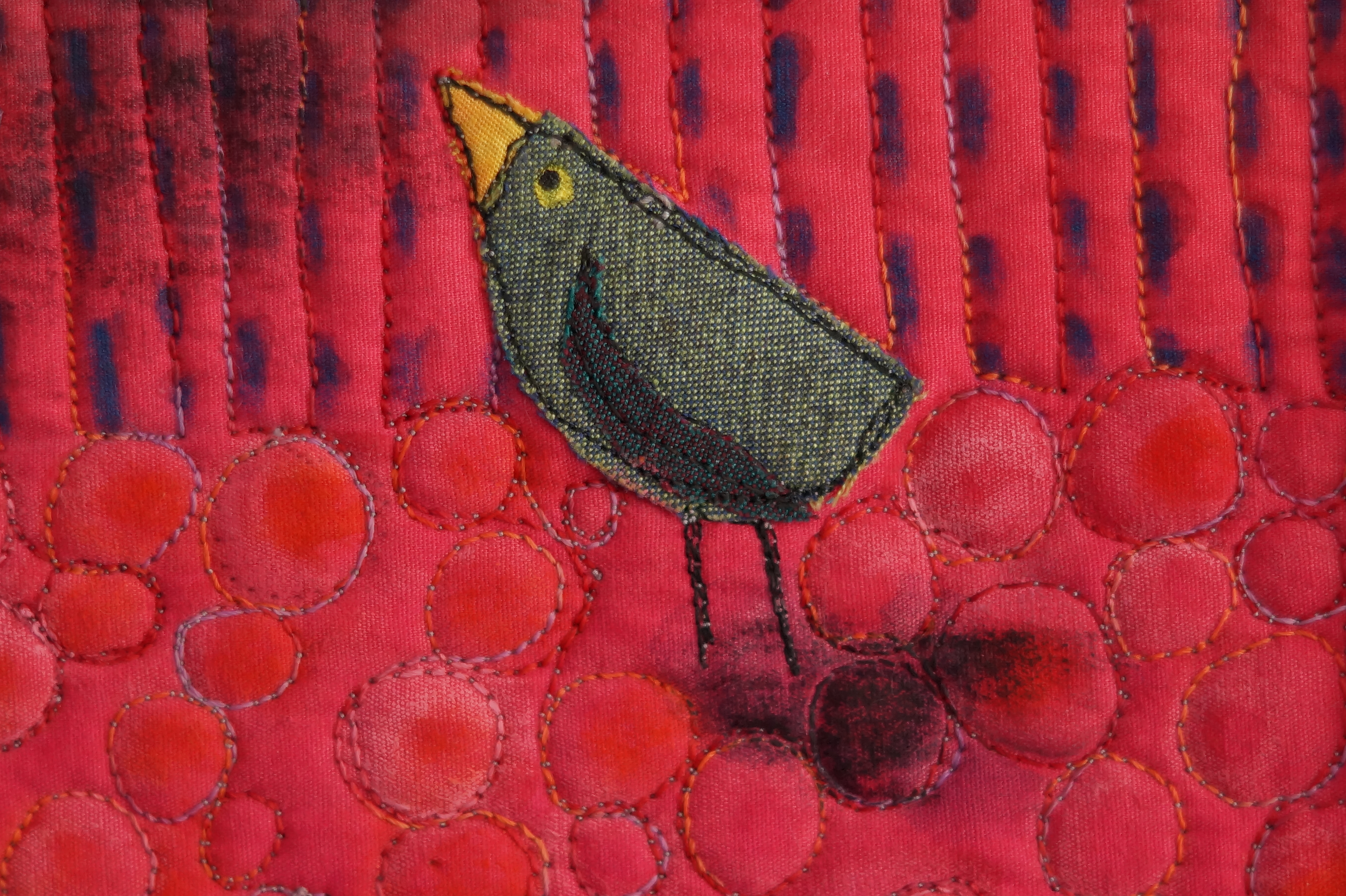
Latitude challenge quilt number 7: ‘Balance’.

I had this image in my mind the minute the theme was announced! I set some parameters for myself that the piece would be whimsical, using bright pinks and oranges and fresh (i.e. not overworked).

I spent some time playing with bird forms in my sketchbook and came up with their ‘attitudes’, which would be very important as it was to be repeated in the overall design. I’m sure I have been influenced by childrens’ picture books, having worked as a teacher librarian for many years. John Birningham comes to mind.

It took some time to find a graduated pink and orange graduated fabric in my stash. I then had to find fabrics that would contrast for the main elements. I used some lovely shimmery cotton that looked like silk in cool colours for the birds and a pastel Kaffe Fassett design for the see-saw. Then it was a matter of fusing and thread-sketching the pieces into place.

Originally I was going to make a stamp to make different patterns on the sky and ground. I think this could have looked very effective, but time was short and this would have taken quite a bit of trial and error. I used the Caran d’ache water soluble pastels instead.

I’m afraid I did not put a lot of thought into the quilting and ended up using my latest ‘default’ free motion pattern. It gives a feeling of movement to the piece, but I’m not sure if it depicts the naive style I was going for.

Having finished the piece I felt there was something missing around the centre. I then added the word ‘balance’ (even though the birds are not balanced), and leaving it for the viewer to work it out. It also hid a wobbly bit of quilting!

If I were to make this quilt again I would not use the water soluble pastels. I think they look messy in the shadows and the lines in the sky. The stamping/printing could have helped to make the piece have cleaner lines.

It would be great to make a little series of these with the brainless birds doing other things with play equipment. I think they would be a nice addition a child’s room or nursery.

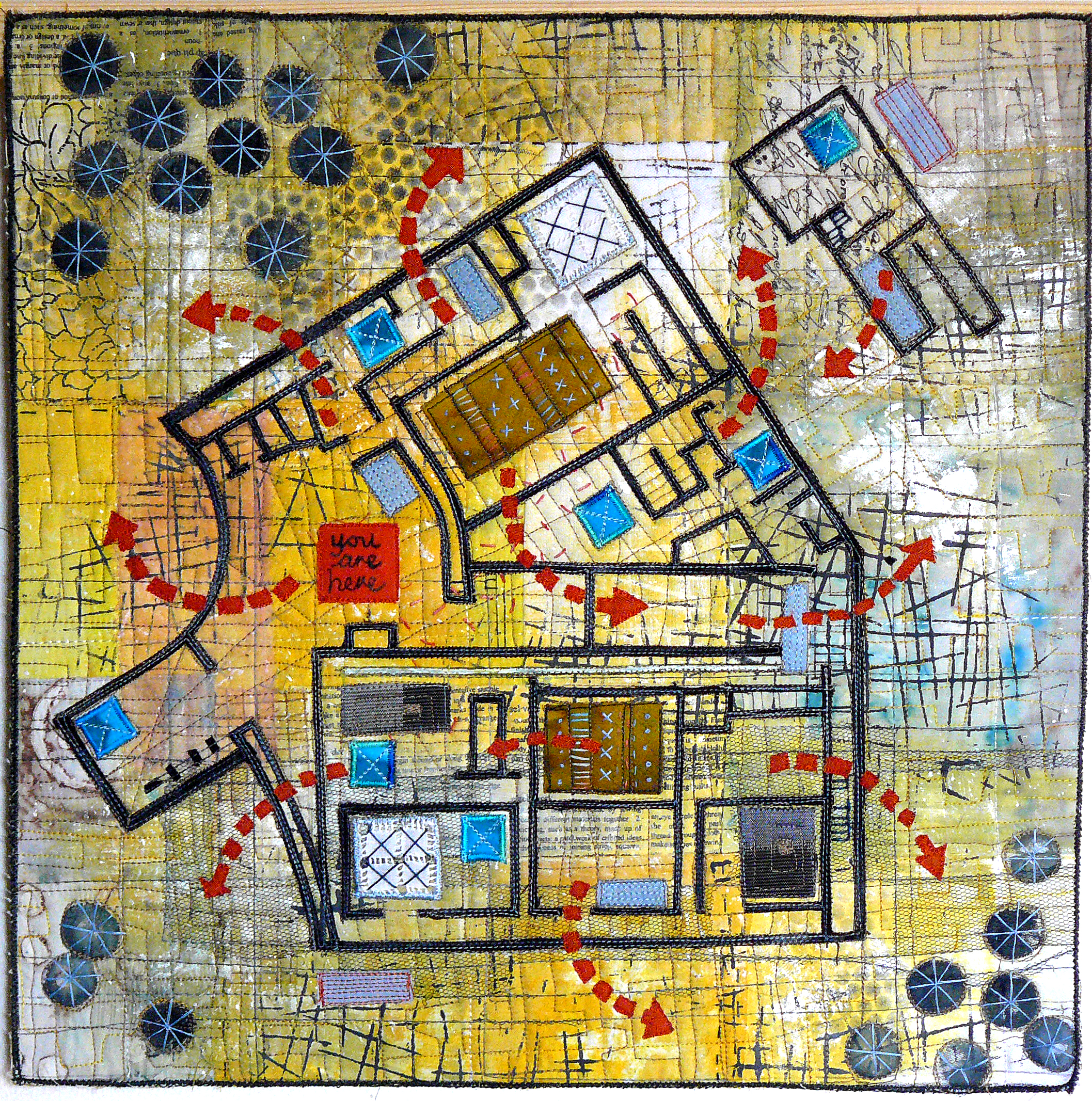
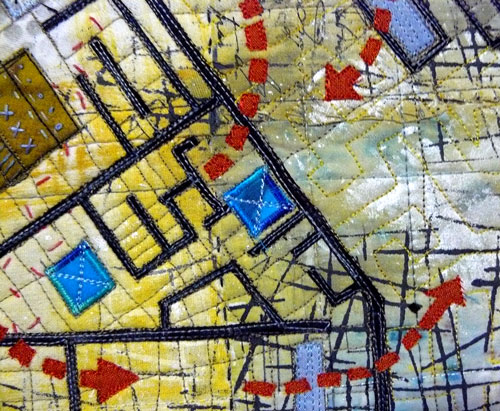
‘Escape Plan’ ….Latitude challenge No 6

Standard

Escape Plan Nov 2013 Escape-Plan-detail-1.jpg-web Escape-Plan-detail-2.jpg-web
After reading about collage process used by Valerie S. Goodwin, I decided to make an
Art quilt map’ to fit in with this theme of ‘escape’. The building plan I have used is fictional and has no particular significance.

My primary intention of this piece was not so much in interpreting the theme, but to present a visual buffet of shape, line, texture and colour.

The collage process was quite an easy and enjoyable one.
1. Light coloured fabric were cut (or torn) and sewn onto a substrate (I used felt) with a contrasting thread. Some rough edges were left.
2. Chunky hand sewing was then added in a random way to give this background some extra texture.
3. Fabric paint (in this case yellow and pearl white) was added sparingly with a brush to unify patchwork pieces together. I also added a thermofax stencil and sequin trash stencil later on.
4. A few sheer fabrics were then applied with misty fuse. I used tulle and pink silk organza.
5. The linear and rectangular elements of the plan were then fused into place and thread painted.
6. The backing was added and the whole thing quilted.
7. More hand sewing, such as the stars on the trees, was added to give the final touch.

I decided that a traditional binding would be too heavy for the piece. The work needed to have a thinner frame, so I decided to try a method by Terry Grant (of ‘The 12’s) of zigzagging over pearl cotton. I thought this worked well, although I found it a bit tricky to keep the couching straight. Perhaps there is a special foot you can use?

I like the colours of grey, yellow and blue, but I’m not too sure about the orange arrows? Perhaps they would look better as a blue-red….perhaps I’m being too fussy!

There were some design issues that has to be dealt with. The walls of the plan were very heavy. I tried to counterbalance this by offsetting them with the trees in the corners. I also try to ‘knock them back’ with thread and I completely painted over one of the inside walls!
It was also difficult to get the arrows to look balanced. I added the “you are here” (against my husband’s advice) as a focal point.

I enjoyed doing the hand stitching for a change and it really took no time at all. I think I would like to make another piece of a place that I identify with– something with paddocks, rivers and dirt roads. I also like the idea of adding your own poetry, like a Haiku.
I would recommend this book/process for any of the Latitude girls to try, even if, like me, you think it is not your ‘thing’.
Linden Lancaster

‘Over the fence’ Vic quilters challenge 2013

Standard

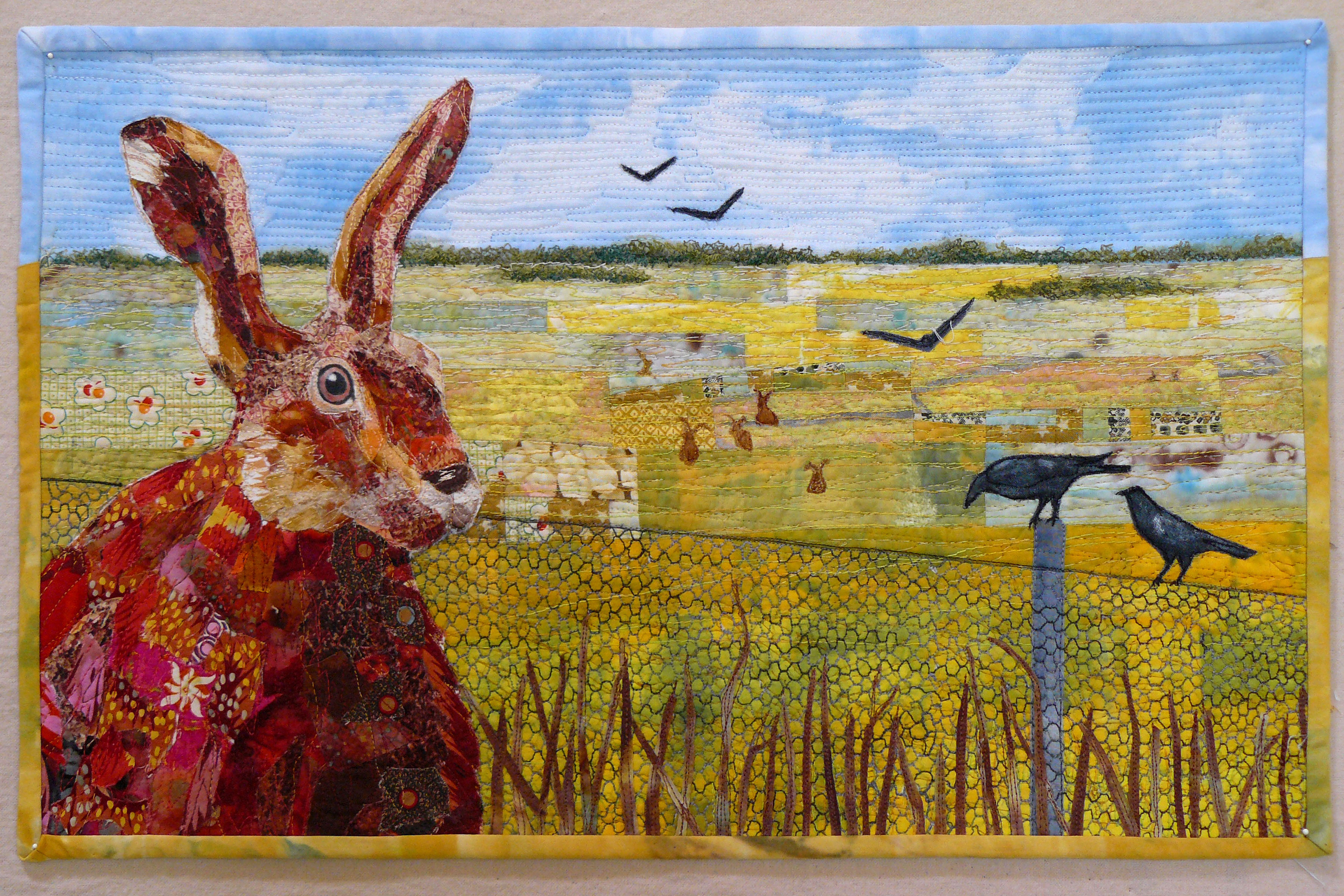
The rabbit-proof fence completed in 1907 was built to protect Western Australian crops and pasture lands from the destructive scourge of the rabbit. The number 1 Rabbit Proof fence was the longest line of unbroken fence in the world, stretching 1,139 miles. The fence represents a unique, if inadequate, response to an over whelming environmental problem.

This is a recently completed piece made for Victorian Quilters challenge for 2013 which is currently travelling the country.  The rabbit in the front is looking at us as if to say” I’m going over there and you can’t stop me”.  I have used tiny pieces of hand cut cotton fabric to build up a collage of the rabbit which were glued down and sewn over. The background is pieced with a mixture of commercial and hand dyed fabric. It was difficult to get the fence right. After some trial and error I ended up free-motion quilting the wire with a darkish grey thread. The crows were added to balance the design.

You might notice the rabbits over the fence in the distance gallivanting in forbidden territory!

P1150014

Rabbit Proof Fence? by Linden Lancaster 2013


‘Dorothy’s Quinces’

Standard

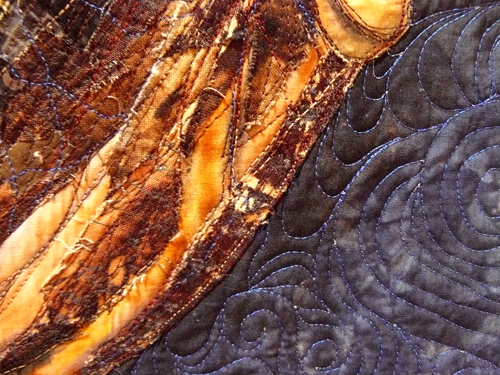
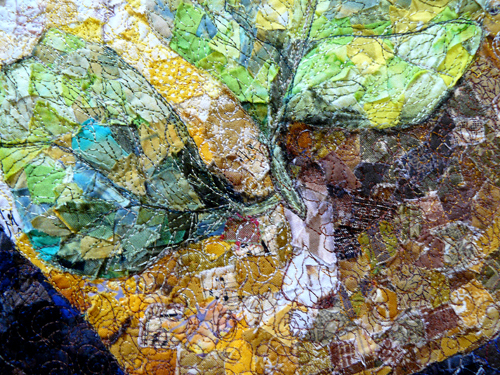
My Mother-in-law grows these wonderful fruit from which we make jelly and paste. This is a piece I have done using a raw edge/confetti technique. Each tiny little piece of fabric in the quinces and leaves were hand cut and glued on one piece at a time. I tried to pay attention to the tones of the fabric to achieve the correct forms fo the fruit. The work was free-motion sketched in variegated threads. I was pleased to try out a quilting design called ‘McTavishing’. It was a great design to fill and improvise around elements. The botanical text was done using a freezer paper stencil and ‘Shiva sticks’. This work will be on display (and for sale) in the Nathalia Art Windows (The G.R.A.I.N store) from December 2013 to early Jan 2014.

Dorothy's Quinces

Dorothy’s Quinces by Linden Lancaster 2013

Dorothy's Quinces detail2 web

Dorothy’s Quinces detail 1

Dorothy's Quinces detail web

Dorothy’s Quinces detail 2